#141 — How to write a good customer case study
November 19, 2025·6 min read

Contents
Why it matters
Case studies prove your product works in production and give prospects a roadmap for how to succeed with your solution. For early-stage companies, they're essential social proof that successful organizations are investing in your product.
The double benefit: They show both business value and technical context—helping engineering teams understand why they should use your product while showing non-technical stakeholders how their business benefits.
Before you start
Get strategic first. Answer these questions before talking to customers:
- What markets or verticals are you targeting? (fintech, e-commerce, DevOps teams)
- What personas do you need to reach? (VPEs at early-stage companies vs. mid-level engineers at mature firms)
- What objections does your sales team need to counter with a story?
- What outcomes are your leads seeking?
- What aspects of your offering need clarification through a real customer example?
Choose your customer wisely: Pick companies that represent your target vertical, persona, or help you overcome your biggest sales objection.
Formats you need
Don't create just one PDF. Plan multiple formats upfront so you capture everything in your initial customer conversations:
- One-sheets: Brief versions for cold outreach and post-call follow-up
- Audiograms: For LinkedIn, Twitter, and ads—let prospects hear customer praise directly
- Slides: Persuasive slides for sales decks that reinforce product value
- Blog posts: Q&A-style interviews with prominent customers
- Pull quotes: Eye-catching quotes for your homepage from high-profile customers
- Talking points: Relevant anecdotes for podcasts you record or appear on
- PR pitches: Stories for trade outlets (as your company matures)
Additional uses: RFPs, ads, nurture sequences, landing pages, cold outreach, live sales presentations.
Getting customer buy-in
Setting expectations for customers
Make a clear ask: Explain why you're asking them specifically and what parts of the relationship they'll discuss.
Time commitment: "The entire process involves a short interview on Zoom, with a chance for you to review the draft before it goes live. It should take no more than 45-60 minutes of your time".
Show examples: Send an example of the final product (even if it's not yours) to help them visualize the polished asset.
Give them control: Always let clients know they'll review a draft and can request changes.
Setting expectations for your team
Optional participation: Unless you have a contractual clause requiring testimonials (which some companies use as a sales bargaining chip), case study participation is optional.
Work with customer success: Find customers who are happy, successful, and not under time pressure to deliver other projects.
Plan for delays: Customers at larger companies may need approval from PR, marketing, or legal departments—this can take considerable time and is out of your control.
The interview
Who to interview
Match your buyer persona: If you're selling to VPEs, interview the VPE. Find someone who balances being high-level enough to understand business value but technical enough to know how the product is used day-to-day.
Keep it manageable: Stick to 1-3 interviewees maximum—more viewpoints become hard to wrangle.
10 critical questions
- What is your role/what does your company do?
- What did [process] look like before? What were the biggest pain points?
- What was the breaking point where you decided to look for a solution?
- How did you find out about [our product]?
- What was the first moment where you realized [our product] was a unique solution?
- What does [process] look like now?
- What other software/apps/tools do you use as part of your [process] workflow?
- Are there quantifiable metrics you use to measure impact? Can you share those numbers?
- What has your team been doing with the time/budget they save?
- What's one thing you'd want someone considering [our product] to know?
The bonus question: Always ask "Can you tell me more about that?" at least once. Interviewees often gloss over details they find mundane but which are critically interesting to prospects—especially tech stack details and other tools they're using.
Pro tip: Record your interviews (with permission due to laws like California's "eavesdropping" statute) so you can stay present and ask meaningful follow-up questions instead of frantically taking notes.
Writing the case study
Success metrics first
Lead with numbers: Put quantifiable improvements front and center—revenue generated, hours saved, incidents reduced, improved SLA performance.
If they don't have metrics ready: Keep alternative metrics in mind during the interview that relate to your value proposition. If subjects are open to checking later, include placeholder metrics in your draft for them to fill in.
Structure and formatting
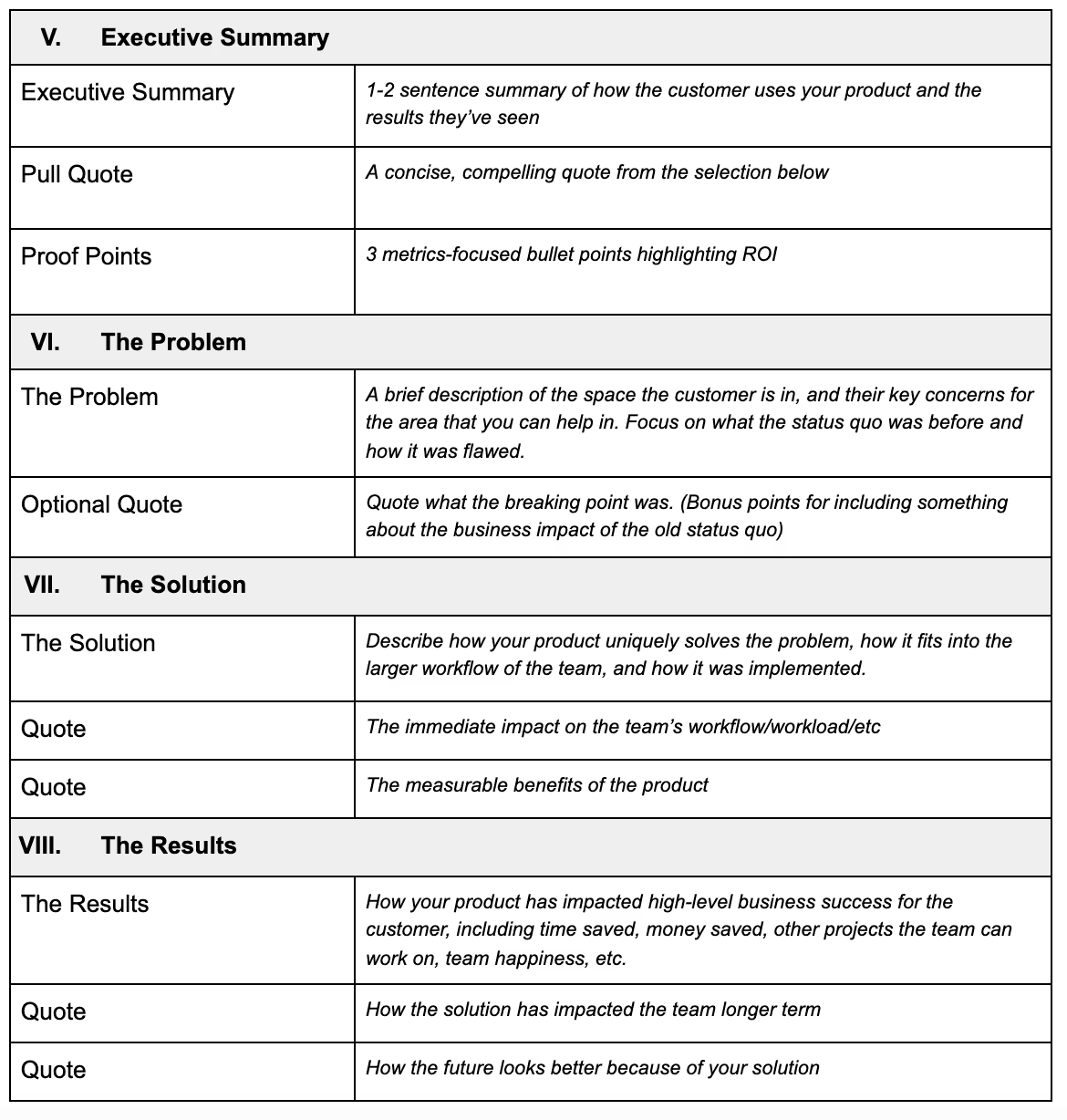
Use subheaders: Break your case study into subsections with clearly-marked headers (no more than 6 words each). This makes content easier to read, skim, and index for SEO.
Keep it short: Write as concisely as possible without losing context of the use case.
Add visual breaks: Use customer quotes, product images, and infographics (if resources allow) to depict the value you provide.
Include a CTA: Add a clear call to action linking to similar content for related use cases or verticals—encourage prospects to "binge" on your content while you have their attention.
Quote hygiene
Light editing is essential: People don't speak in crisp sound bites—lightly edit quotes for clarity and usability out of context.
Don't over-sanitize: If your final quotes sound robotic or exactly like your messaging framework, you've gone too far. Keep quotes authentic and human.
Shipping it
Review process
Always get approval: Unless you enjoy dealing with angry communications managers and lawyers, give case study subjects a chance to review before publishing.
Minimize editing rounds: Send both a PDF of the final mockup and a Google Doc for editing—having the "final" visual helps push stakeholders to give feedback.
Set a hard deadline: "We're planning to publish on [date], please let me know if you have any edits by [date]" drives faster turnaround than open-ended requests.
Distribution strategy
Once published:
- Add it to your website
- Share with your sales team
- Use in cold outreach
- Include in RFPs
- Post audiograms on LinkedIn
- Send to other customers
- Promote to your target audience across all planned formats
Examples to study
Multiple formats done well:
- LaunchDarkly: Clear, easy-to-parse framework
- Smartsheet: Customer quotes frame user stories, highlights specific use cases
- PagerDuty: Written articles, blogs, and video formats
Compact and visual:
- Snyk: Compact designs packed with quotes and visuals for easy skimming
- Sanity.io: Beautiful case studies with consumable subheadings and embedded visuals
Metrics-first approach:
- Radar: Minimalist template that leads with success metrics and tells before-and-after stories
Deep storytelling:
- Tailscale: In-depth stories covering each customer's vertical and unique business challenges to properly frame the problem
- Mux: Adds both video and written components to in-depth case studies
Frequently asked questions
How long does it actually take to create a customer case study from start to finish?
Expect 2-4 weeks total timeline, with only 2 hours of your customer's time across interview and review. Your internal time: 6-10 hours for interview prep, writing, design mockups, and coordination. The biggest variable is approval delays—enterprise customers with legal/PR review can add 1-3 weeks to the process.
What's the ideal length for a B2B SaaS case study to rank on Google?
For SEO-optimized website case studies, aim for 1,200-1,500 words with proper subheadings and internal linking. Sales enablement versions should be 600-800 words, while email nurture snippets work at 200-300 words. Keyword density should be 1-2% of total word count naturally incorporated. Longer comprehensive case studies (1,200+ words) rank better for search while shorter versions convert better in sales contexts.
What if my customer won't share specific metrics or revenue numbers?
Focus on operational metrics instead of financial ones. Replace "30% revenue increase" with "reduced incident response time from 45 minutes to 8 minutes" or "cut manual deployment steps from 23 to 3." Time saved, error rates, team capacity freed up, and process improvements are often easier to get approved than revenue figures and still demonstrate clear ROI.
When should startups begin creating case studies—seed stage or wait until Series A?
Start as soon as you have 3-5 paying customers using your product in production for 60+ days. Stage doesn't matter—traction does. Early case studies from design partners or pilot customers prove product-market fit to investors and help close your next 10 deals. LaunchDarkly published case studies pre-Series A, and Tailscale created deep customer stories while still in beta.
Should I offer incentives or discounts to customers who agree to case studies?
Generally no—happy customers usually participate willingly if you make the process easy. Exception: if your contract includes "mutually agreed marketing participation" clauses, you can negotiate case studies as part of renewal discussions or enterprise pricing. Offering Amazon gift cards ($100-250) or account credits can work for SMB customers, but enterprise buyers typically can't accept personal incentives due to procurement policies.
How many case studies do I need before they impact conversion rates?
B2B buyers need to see at least 3 case studies across different use cases or verticals before trust significantly increases. Companies with 5+ published case studies see up to 50% improvement in landing page conversion rates. Prioritize breadth over depth initially—one case study per target persona or vertical, then add more in your best-performing segments.
What's the actual ROI of case studies compared to other marketing content?
Case studies are among the highest-converting B2B content assets. Gated case study landing pages convert at 2.6-7.4% compared to the 2.3% B2B average, and prospects who read case studies are 3-5x more likely to request demos. For context, Later achieved a 60% conversion rate on gated case study content, generating 100,000+ leads.
How do I optimize case studies for SEO and Google search rankings?
Publish case studies in blog-style format with proper H1/H2/H3 structure, not just as PDFs. Conduct keyword research targeting "[your product category] case study" and "[industry] [problem] solution" phrases. Use descriptive subheadings like "Results: 40% Faster Deployment" instead of generic "Results." Add internal links to product pages, implement JSON-LD schema markup for reviews/ratings, and create unique URLs for each case study.
What happens if a customer backs out after initially agreeing to a case study?
Build in a contingency by always having 2-3 case study candidates in progress simultaneously. Customer priorities shift, legal teams block publication, or leadership changes kill approvals 20-30% of the time. Always get written agreement upfront (email confirmation works), set clear deadlines, and have backup customers identified before investing significant writing time.
Can I reuse the same case study for different buyer personas or industries?
Yes, but reframe the narrative for each audience. Create a "master" case study, then build persona-specific one-pagers emphasizing different outcomes. For a DevOps tool: highlight deployment speed for engineering leaders, cost savings for CFOs, and risk reduction for CISOs—all from the same customer story. Snyk and PagerDuty both repurpose single case studies across 4-6 formats and audiences.
Do I need legal consent and GDPR compliance for customer case studies?
Yes, always obtain explicit written consent before publishing testimonials or case studies. Your consent form must specify: what data you're collecting (name, photo, company, job title), where it will be used (website, sales materials, ads), how long it will be published, and how customers can revoke consent. Store consent documentation for 7+ years. For EU customers, GDPR requires "specific, informed, and freely given" consent that's separate from your service agreement.
How do I measure case study effectiveness and track attribution?
Track these metrics: page views, time on page (target 2+ minutes), CTA clicks, demo requests from case study traffic, and lead source attribution in your CRM. Use UTM parameters for each distribution channel (email, LinkedIn, sales deck). Monitor which case studies sales teams reference most in closed-won deals. Set up goal tracking in Google Analytics for PDF downloads and video plays. For gated content, measure conversion rate from landing page to download (benchmark: 2.6-7.4%).
Do I need a designer or can founders create effective case studies with basic tools?
You can launch without design resources using Google Docs templates, Notion pages, or simple Canva layouts. Radar and many YC companies use minimalist text-heavy formats that rank well and convert. Invest in design once you have 5+ case studies and budget for visual polish—but don't let lack of design resources prevent you from publishing your first three. Tools like HubSpot's AI Case Study Generator can create drafts from interview transcripts.
Should I prioritize video case studies or written case studies first as an early-stage startup?
Start with written case studies that include short audio clips (1-2 minute customer soundbites recorded during your interview). Written content ranks on Google, gets indexed, and repurposes into sales emails and decks more easily. Add video later when you have budget—PagerDuty and Mux layer video onto existing written case studies rather than creating video-only assets. Video case studies work best as 2-3 minute formats for YouTube and LinkedIn.
How do I get legal and executive approval faster when customers are stalling on case study reviews?
Send both a visual PDF mockup and an editable Google Doc simultaneously. The polished PDF creates urgency ("this is ready to publish") while the Doc allows fast inline edits. Set a specific publish date: "We're releasing this on [date], please send any changes by [date minus 5 business days]"—hard deadlines drive 2-3x faster approvals than open-ended "whenever you have time" requests.
What's the biggest mistake founders make with their first case studies?
Leading with product features instead of customer outcomes. Prospects don't care that you have "real-time webhooks and GraphQL APIs"—they care that customers "reduced integration time from 6 weeks to 3 days." Structure every case study as: painful before-state → quantified improvement → what they're doing with saved time/budget. Smartsheet and LaunchDarkly excel at outcome-first storytelling.
Can I mention competitors in customer case studies or is that risky?
Yes, "before-and-after" comparisons that mention competitor names can be powerful if your customer switched from a competitor to your product. Always get customer approval before naming competitors. Use neutral language: "Previously used [Competitor], which lacked [capability]" rather than disparaging claims. Comparative case studies rank well for "[Your Product] vs [Competitor]" searches and address direct comparison questions during sales cycles.
What should I do if a customer churns after I've published their case study?
Immediately unpublish or archive the case study from your main website, but preserve the URL with a 301 redirect to avoid breaking backlinks. Keep internal copies for historical reference and update your sales team immediately. If the customer churned due to product fit (not service issues), you might keep an anonymized version highlighting the use case. Generally, featuring former customers damages credibility—remove within 48 hours of churn notification.
How do I create anonymous case studies when customers won't allow their name to be published?
Use industry descriptors instead of company names: "Fortune 500 Financial Services Company" or "Series B Healthcare SaaS Platform". Include specific metrics and quotes (with permission), just remove identifying details like logos, employee names, exact company size, and geographic location. Anonymous case studies convert 40-50% worse than named ones, so use them only when necessary. Examples: "Delivering passwordless digital services to telco customers".
What schema markup should I add to case studies for better search visibility?
Implement JSON-LD schema markup for Review, AggregateRating, and Article types. Include: review author (customer name/company), rating value (if applicable), review body (key quote or summary), item reviewed (your product), and publish date. Google prefers JSON-LD format over Microdata or RDFa because it keeps HTML clean. Rich snippets from schema can increase click-through rates by 20-30% in search results.
Where should I distribute case studies beyond my website to maximize reach?
Follow this multi-channel distribution strategy: Publish blog-style on your website for SEO, share on LinkedIn with customer tag (amplifies reach to their network), post audiograms with customer quotes on social media, add to email nurture sequences, include in sales enablement materials, submit to industry-specific directories, share in relevant Reddit/Facebook communities, create LinkedIn Ads targeting similar personas, and send to PR outlets as contributed content. HubSpot reports 75% of case study traffic comes from organic search and social.
How often should I update existing case studies with new metrics or information?
Review case studies every 6-12 months and update if customer metrics have improved significantly (e.g., "6 months later, they've saved an additional $50K"). Add a "Last Updated: [date]" timestamp to maintain credibility. If your product has evolved substantially, reach back out to featured customers to capture new capabilities they're using. Refreshing content with new data can boost search rankings 15-20% by signaling freshness to Google. Archive case studies older than 3 years unless the customer story remains highly relevant.
What tools and software do early-stage startups use to create case studies efficiently?
Start with free or low-cost tools: Loom or Zoom for recording customer interviews, Otter.ai for automated transcription, Google Docs for collaborative writing and customer review, Canva for one-pager designs, HubSpot's AI Case Study Generator for draft creation from transcripts, and Figma for more advanced layouts if you have design resources. For distribution: Buffer for social scheduling and UTM tracking. Total startup cost: $0-50/month for basic stack.
Should I gate case studies behind a lead capture form or make them freely accessible?
Use a hybrid approach: Make 1-2 "hero" case studies freely accessible on your homepage and product pages to build trust without friction. Gate your full case study library or downloadable PDF versions to capture leads. Gated case studies convert at 2.6-7.4%, but freely accessible content ranks better on Google and supports bottom-of-funnel prospects who need immediate proof. Test both approaches—companies like Later see 60% conversion on gated content, while others prioritize SEO value of ungated content.
Keep reading
#142 — How to build a predictable sales pipeline
Build a predictable sales pipeline and repeatable closing processes that target your most profitable market segments.

#143 — How to start an open-source startup
While fraught with tensions, OSS remains a positive force and a viable way to create and distribute software.

#144 — How to position your open-source startup
Positioning your open source startup is about more than technical choices, it's about owning your strategy and narrative.