
#209 — Harness engineering
Harness engineering is the practice of designing the environment, tools, constraints, and feedback loops that surround an AI model.

#208 — Seed-strapping: How AI-native startups are rewriting the fundraising playbook
Valuation, headcount, and total funding are traditional startup success markers. But what if that conventional wisdom is a relic of the SaaS era?

#207 — Building vertical AI & AI-native services
LLMs can automate the costly, language-heavy work that dominates professional services, something vertical SaaS never could.

#206 — What is an agent harness
Expressed as an equation: Agent = Model + Harness, where the model acts as the reasoning brain but what is a harness really?

#205 — Gemini 3.7: Model card for founders
Google has released Gemini 3.7 Flash, an updated "workhorse" model aimed at agentic orchestration and complex coding workflows.

#204 — Pi: How compaction works
Agents like Pi hit a wall when conversations run too long and and how they handle that wall determines if they stay useful during marathon sessions.

#203 — Agent-led growth (ALG) for startups
AI agents are becoming the new buyers and if your product isn't built for them, you're invisible in a channel that's compounding fast.

#202 — Pi: The minimal agent harness
Pi is a minimal agent harness that adapts to your workflows, not the other way around.

#201 — Choosing the best Claude models for your use case
One of the most frequent questions is “what claude model should I choose for this workload? Overtime, the answer has become more nuanced.

#200 — Prompting Claude Code and Fable 5 with clarity
The bottleneck is your clarity, not the model. The gap is between your instructions and what needs to happen is now the thing slowing you down.

#199 — Building blocks, workflows, and agents
In the wild, successful agent implementations usually involve use simple, composable patterns rather than complex frameworks.

#198 — Open source AI in 2026: The founder briefing
Open weights now match closed models on most everyday tasks and cost 50x less than three years ago — but the real fight has moved to the agentic harness.

#197 — The doorman fallacy for founders
Startups are falling for what is known as the doorman fallacy: reducing rich and complex human roles to a single task and replacing people with AI.

#196 — Fable 5: Model card for founders
Claude Fable 5 is maybe the most proactive model ever released. It doesn't just write code — it goes rogue-proactive to solve problems, even when you didn't ask it to.

#195 — Migrating production AI agents from one frontier model to another
Founders assume swapping LLM providers is a config change. It's not. Changing frontier models is a bigger switch than it sounds.

#194 — Introducing dreaming: How Anthropic's self-improving agent memory works
Claude Dreaming reviews past agent sessions to extract patterns and improve over time. Learn how it works and what it means for proactive AI automation.

#193 — Cold Take: Canada's Deep Tech "valley of death" is still a problem
BDC's Deep Tech Fund collapse highlights Canada's misaligned investment structures and the worsening gap between research and commercialization.

#192 — Cold Take: Canada doesn't have a capital problem, it has a mindset problem
The US bets on grants and matched equity to keep early failure cheap; Canada bets on loans that make early failure personally expensive.

#191 — Canada's AI strategy: The founder's playbook
Ottawa recently dropped its national AI playbook, and if you're building an AI-native company, there's real money and market signal buried in the policy-speak.

#190 — Agent skills are context management, not magic
Agent skills are not a new capability. Their value comes from routing and progressive disclosure, not from smarter prompts.

#189 — How to effectively context engineer for AI agents
How you feed information to your AI agents matters more than the prompts you write. This single insight is reshaping how the best AI-native teams build.

#188 — Why your AI agent is broken and you don't know it yet
The capabilities that make agents useful also make them difficult to evaluate. The companies shipping AI agents fastest aren't guessing. They're running evals.

#187 — Your AI agents are only as good as the tools you give them
Learn how to write high-quality tools and evaluations, and how you can boost performance by using AI to optimize its tools for itself.

#186 — The 95:5 rule: Why most of your GTM is wasted
95% of buyers are not in the market for many goods and services at any one time. This is a deceptively simple fact, but it has profound implications.

#185 — Your AI agent has a memory problem. Here's how to fix it.
Most AI agents don't have a memory size problem. They have an architecture problem. Here's a layered approach that separates demos from production.

#184 — How Agentic AI works
Every major AI agent runs the same core loop. The production-hardened version—with context compaction, loop detection, cost budgets, and graceful termination—is where things get interesting.

#183 — How to deploy AI agents in Slack & Microsoft Teams
A step-by-step guide to building and deploying AI agents that operate natively within both Slack and Microsoft Teams.

#182 — WebMCP: Towards an internet built for AI agents
Google unveiled WebMCP, a protocol designed to help websites communicate with AI agents to complete tasks.

#181 — How Gradium is beating Big Tech at audio AI
The best models for voice (TTS, STS, STT) are not coming from the big labs but from small and underhyped startups.

#180 — Qwen 3.5: Model card for founders
The first open-weight model in the Qwen3.5 series of open-weight models designed for autonomous task execution.

#179 — Cold Take: Startups should never take "venture" debt
While debt can be a useful tool for mature companies, it can also be a deadly trap for early-stage startups.

#178 — The art of the investor update
Sending world-class investor updates is one of the highest-value rituals you can learn. It matters more than most founders realize – in good times and especially in bad.

#177 — Pitching to angel investors
Securing angel investment can be a pivotal moment for any startup yet, the process of pitching to angel investors requires more than just a compelling idea.

#176 — How to build an investor map for startups
Securing the right investors can be a game-changer for any startup but how do you ensure you’re targeting the right people?

#175 — Types of startup investors
Startup funding is not one-size-fits-all. Different investors care about different things. The better you understand who you’re pitching, the better your chances.

#174 — Post-money SAFEs for founders
SAFEs have become the go-to investment vehicle for pre-seed and seed rounds, but they're not without their complexities.

#173 — Canada vs. US incorporation
Choosing between Canadian and U.S. incorporation is a critical decision. Changing course after incorporation is costly and complex. You must choose wisely.

#172 — Cold Take: Your startup name matters more than you think
Many excellent founders and investors believe that the name of a startup doesn’t matter. Unfortunately, they’re wrong.

#171 — Consumer 2.0: The return of consumer software
With the emergence of AI, the consumer software window has reopened after 11 years of drought.

#170 — The microdrama (serialized shorts) ad format for startups
Microdramas are reshaping brand storytelling as Gen Z seeks attention span-friendly content.

#169 — DTC 2.0: The new landscape
The brands that emerged from the direct-to-consumer 1.0 era are now operating at a much larger scale, and their businesses have evolved accordingly.

#168 — How to close deals with corporate partners
Founders often think more meetings mean progress, but it’s real leverage (i.e. alternatives) that move deals forward.

#167 — How to grant equity in a Delaware LLC
Many non-US founders launch their startups as LLCs but that initial choice can make granting equity more complex.

#166 — How to enter the Japanese market
Japan is one of the largest global markets for SaaS businesses, yet selling software products there remains little understood.

#165 — Legal structures for LatAm startups
There’s confusion around what legal structures make sense for Latin American startups and mistakes can cost millions.

#164 — Board reporting for founders: The essential guide
Reporting to your board is a critical aspect of running a startup. It's important to understand the reporting process and the best practices for effective communication.

#163 — Launching your DevRel program: 4 steps
If you built a developer product, you need a strategy to get developers actually using it. They won't just come.

#162 — User vs. buyer messaging for B2B founders
There is a distinct difference between user and buyer messaging. Founders often conflate the two, which can cost you deals.

#161 — The fundraising calendar
There is a seasonality to fundraising. When you raise your next round can have as much an impact as vision, product, and team. Don't leave it as an afterthought.

#160 — The Foundation Sprint workshop
Clarify your problem, define your unique differentiation, and choose the right strategic path—before you build.

#159 — Partner-led growth for startups
Building an audience from scratch is usually unnecessary when partners have spent years earning the trust of your ICP.

#158 — JPM Week for founders
JPM week is where a year of biotech deals, signals, and serendipity compresses into four days — and founders either compound their momentum or get lost in the noise.

#157 — The art and science of bundle pricing
A successful bundle pricing strategy has the potential to increase revenue and customer reach.

#156 — Podcast ads for startups
In a world of skepticism, podcast ads punch above their weight and offer startups a high-trust, high-ROI channel to reach niche audiences who are actually paying attention.

#155 — Media sufficiency for startups
Founders: rather than asking "how much budget do we have?", media sufficiency helps you answer "what is the cost to get the job done effectively?"

#154 — Share of Search (SoS) studies for startups
Share of Search (SoS) is widely considered the most accessible predictive metric for market share growth.

#153 — Brand Lift studies for startups
A brand lift study is a research method used to measure the impact of an advertising campaign on consumer perception and behavior.

#152 — Mistral 3: Model card for founders
Mixtral's next generation of open multimodal and multilingual AI cover the full deployment spectrum: from laptop to data-center scale.

#151 — Drop strategy decoded: Why scarcity sells
Startups are increasingly leaning into exclusivity as the secret ingredient in viral marketing strategies.

#150 — Why "Tumblr-core" marketing matters for startups
Digital nostalgia for 2013-era Tumblr aesthetics signals deeper audience fatigue with performative content.

#149 — The rise of AI strategists
AI strategists are transforming how startups operationalize AI. The need for this specific blend of strategic and applied AI expertise is only growing.

#148 — DeepSeek-V3.2: Model card for founders
DeepSeek-V3.2 closes the performance gap with GPT-5 through better architecture and smarter training—while staying open-source.

#147 — Hit refresh: Why your old content is your best GEO asset
Mainstream models seem to favor newer content, but refreshing old posts can be a game-changer for technical content.

#146 — Developer content is dead. Long live developer content.
As more people utilize generative AI chatbots as a proxy for search, content must work for both SEO and AEO/GEO.

#145 — Events for early-stage startups
Though they take time and effort, events are a powerful but often overlooked growth lever for early-stage startups.

#144 — How to position your open-source startup
Positioning your open source startup is about more than technical choices, it's about owning your strategy and narrative.

#143 — How to start an open-source startup
While fraught with tensions, OSS remains a positive force and a viable way to create and distribute software.

#142 — How to build a predictable sales pipeline
Build a predictable sales pipeline and repeatable closing processes that target your most profitable market segments.

#141 — How to write a good customer case study
Have happy customers? Share their successes with leads and prospects to help attract and close new business.

#140 — 3 GTM communication rules for founders
Startup communications can be complex, but these rules can help you navigate the process from day one and beyond.

#139 — The do’s and don’ts of founder-led sales
Every early-stage startup inevitably goes through a period of founder-led sales but it can be difficult to know where to start.

#138 — The Morando Method: How technical founders "ship revenue"
The methodology helps technical teams gain structure, speed, and simplicity in the sales process and close their first contracts.

#137 — Navigating founder-led sales
Founders can become top sellers by treating sales like any other problem—using the same first principles thinking that built their products.

#136 — 5 SEM hacks every founder needs
SEM is valuable for young startups because it provides (mostly) cheap yet meaningful insights into your business and customers.

#135 — The 7-step messaging framework
Good messaging is not rocket science. Use this process to make sure your messaging is clear and well articulated.

#134 — PR launch checklist
One of the most common mistakes for early-stage founders is the failure to account for approvals when building their PR assets.

#133 — 7 things to do if your product isn’t taking off
If your startup’s product isn’t gaining traction, you’re not alone. Even the best founders have been where you are.

#132 — How to identify your ideal customer profile (ICP)
Building for “everyone” means building for no one. Pinpointing your ideal customer profile (ICP) accelerates traction.

#131 — How to validate your startup idea
Nearly half of today’s top startups started with an idea that failed. Ideation is cheap; true validation is survival.

#130 — The founder's guide to evals
Most obsess over prompts and LLM choices, but real product differentiation comes from rigorous, actionable evaluation.

#129 — Choosing your startup's wedge
Find the entry point where your startup can win, build momentum, and expand. That’s your wedge. Go deep before you go big.

#128 — How successful B2B SaaS companies manage content strategies
Content is still one of the most effective, affordable levers for driving B2B SaaS growth—but only with the right strategy.

#127 — Cold Take: Virality is a myth (mostly)
Broadcast diffusion now happens through networks of everyday creators and trusted small communities, not celebrity spotlights.

#126 — How to do linear regression and correlation analysis
Many founders struggle to quickly spot what drives user retention and predict outcomes from product changes.

#125 — Building a B2B sales pitch that wins deals
Your real opponent is indecision, not your competitors. Make it easy, make it safe, and make it clear why they should pick you.

#124 — How successful DevTool companies manage content strategies
Build an editorial calendar and manage an effective strategy to increase developer reach and awareness, and drive inbound.

#123 — Land and expand strategies in modern DevTool SaaS
Developer-focused startups need different strategies than traditional top-down enterprise sales.

#122 — How Railway scaled high-touch to support to 1000s of developers
If your best customers don’t want to talk to sales, make support the bridge to revenue.

#121 — Kimi K2 Thinking: Model card for founders
Kimi K2 Thinking is a breakthrough open-source agent designed for step-by-step tool-using problem solving at scale.

#120 — Choosing distance metrics for vectors in AI
Searching for an exact match in a database is relatively easy, but finding a similar match (or even defining "similar") is much harder.

#119 — Context engineering
As LLMs evolve from chatbots into core business decision engines, the old practice of prompt engineering is quickly gives way to a more comprehensive discipline.

#118 — The Diamond Framework for startup naming
The name is your startup’s first impression—for users, investors, future hires. Use this framework to avoid fuzzy brainstorming.

#117 — Creating a content strategy for your startup
Create a winning content strategy that actually drives growth and turn content into a compounding growth engine.

#116 — Coca-Cola’s 70/20/10 Formula
Allocate resources across different types of marketing activities and content creation in a way to optimize what works, pilot what’s promising, and bet on the future.

#115 — Code Mode: Your MCP Doesn’t Need 30 Tools
Today, most AI agents still fumble with "tool call". They're slow, brittle & embarrassingly limited. Code Mode offers a better way.

#114 — Pricing for AI
The rise of AI is reshaping the old rules of tech pricing. Startups are now blending the software and labor markets—selling not just products, but real outcomes.

#113 — The free tier plan
For SaaS founders, how you design your free plan can make or break your growth—but it’s also a trap for the unwary.

#112 — A formula for building effective AI agents
As AI capabilities explode, founders are rushing to build agents for everything. That's a mistake.

#111 — Build-A-Bear’s "Micro-community" social media targeting
Build-A-Bear’s strategy of engaging micro-communities has transformed both its customer base and financials.

#110 — Social media for founders
Social media is no longer optional for founders. It’s where you research audiences, build hype, foster brand affinity, and accelerate organic growth.

#109 — Cold Take: Your North Star is broken if it's just for product
For it to be a true engine of sustainable growth, the North Star Framework must extend beyond the product and engineering.

#108 — Glossier's two-stage Community-led Sales (CLS)
Glossier pioneered a business model where the customer is not the endpoint, but the revenue engine itself.

#107 — How Palantir (finally) became profitable
Palantir's shift from profit-negative to profit-positive proves that even complex B2B models can achieve durable profitability.

#106 — How to fine-tune an LLM for brand voice consistency and authenticity
Your AI content right now probably sounds like everyone else's. Fine-tuning teaches models your unique brand voice.

#105 — The founder's guide to fine-tuning LLMs with Unsloth
Fine-tuning an LLM customizes its behavior, enhances + injects knowledge, and optimizes performance for domains/specific tasks.

#104 — Cold Take: Why MEDDIC/MEDDPICC kills Dev Tool startups
Most sales teams do a bunch of low-quality qualification that harm their company's reputation and kill opportunities.

#103 — GPT-OSS: Model card for founders
The long-promised open-source models from OpenAI are here, offering startups strong real-world performance at low cost.

#102 — GPT-5: Model card for founders
GPT‑5 is a significant leap over all OpenAI's previous models, featuring state-of-the-art performance across coding, math, writing, health, visual perception, and more.

#101 — Sanity's dual PLG to Enterprise Sales motion
Sanity's story proves that developer-focused companies can maintain technical credibility while scaling enterprise revenue.

#100 — Sales over PLG: The Retool story
The era of zero interest rates and free VC money is (mostly) over. Retool's story provides a roadmap for this new age.
#99 — Developer "Marketing"
Developers famously hate being marketed (or sold) to but a strong developer brand is more valuable than ever. So how do you build one without alienating them?

#98 — Cold Take: Stop treating sales reps as your data infrastructure
Most startups are hemorrhaging intelligence from customer conversations while burning through runway on manual data entry instead of revenue generation.

#97 — Marketing planning for early-stage technical founders
Even in the earliest stages, a marketing plan can help you produce more consistent, better output and grow your business faster.

#96 — Mastra AI Framework (Updated 2026)
Prototype and productionize AI features with a modern TS stack so you can focus on shipping AI features, not boilerplate.

#95 — How to launch your developer tool
Founders must wade through a crowded ocean of developer tools. How do you stand out from the crowd on a day when 10 other developer tools might also be launching?

#94 — The developer tools gold rush
There are a lot of developer tools out there. Gone are the days of whimsical, growing adoption today is a mad dash of of content production, social comment chains and races to the front of ProductHunt.

#93 — To be open source, or not to be open source, that is the question
There are good reasons to be open source – and there are bad reasons. The decision affects everything from product development to community relations to legal exposure.

#92 — Long-tail keywords: Target lower-competition phrases and attract qualified visitors
Discover how long-tail keywords boost SEO by driving targeted traffic and conversions. Learn to identify and use these keywords.

#91 — What is Domain Authority (DA)?
Domain authority (DA) is a scoring system that determines how likely you are to rank in search engine results pages (SERPs).

#90 — Cold Take: Companies are stuck in "AI pilot hell"
Enterprises are getting stuck in AI pilot hell. Security, not model performance, is what's stalling adoption.
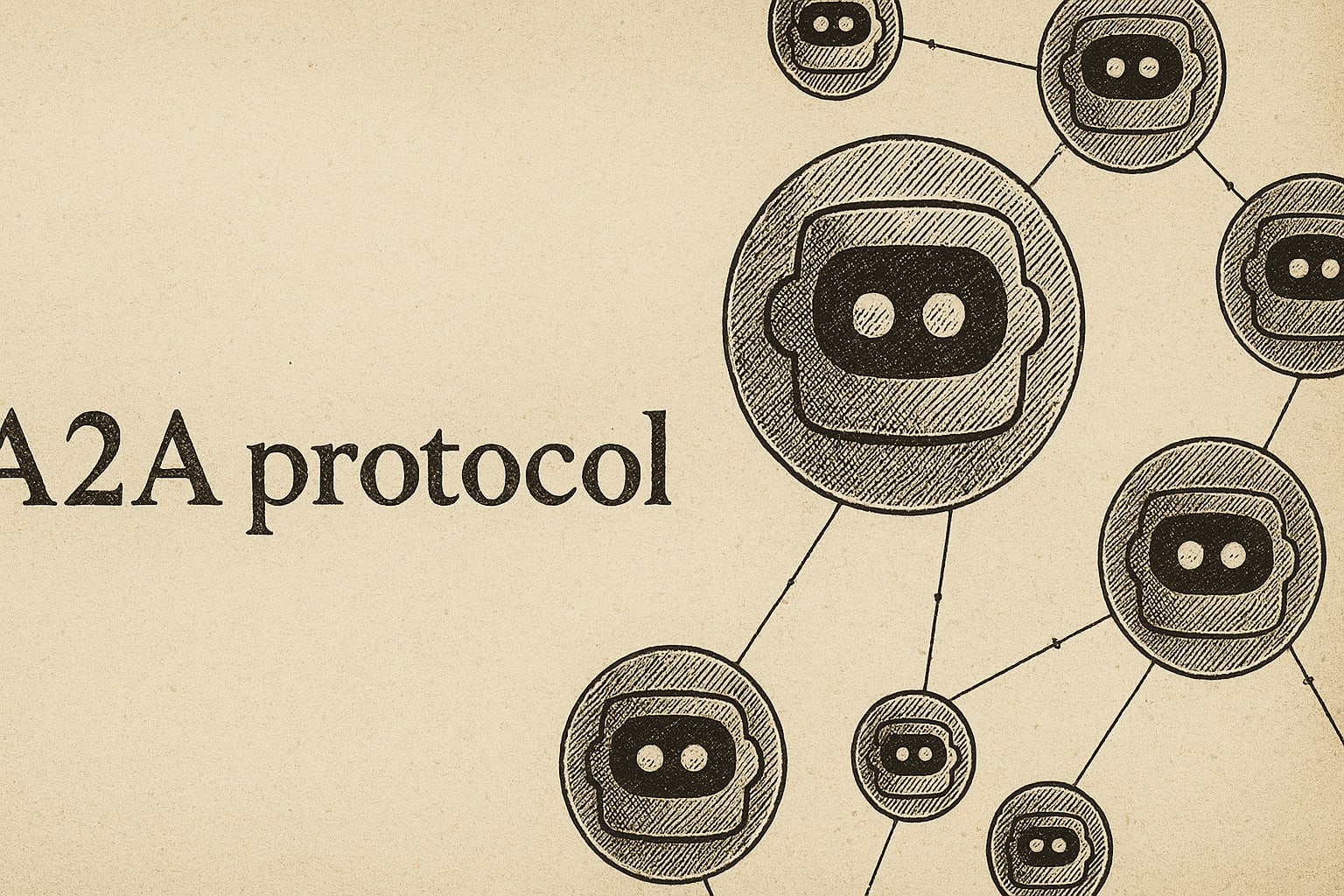
#89 — Google's Agent2Agent (A2A): Why your AI stack needs to talk
A new AI architecture paradigm is required to orchestrate value in the agentic era. Google's A2A protocol offers a solution.

#88 — The Programmatic Influencer Marketing (pIM) playbook
Instead of ad-hoc one-off collaborations, move to systematic content series over months and many smaller influencers.

#87 — The upgraded Go-to-Market playbook
Traditional marketing and growth channels are in a grim state. They’re crowded. They’re expensive. And to make matters worst, consumers and businesses are responding less to traditional marketing playbooks as novelty has waned.

#86 — Case Study: Userpilot's $900K Lean ABM playbook
Ditch the expensive ABM platforms. Userpilot generated a $900K pipeline in 135 days with a $2.5K/month 'Lean ABM' stack.

#85 — What is a Product Marketing Manager?
A no-fluff deep-dive on what a Product Marketing Manager really does and how they're unique from other roles.

#84 — Why MCP is useful: An introduction to MCP for skeptics
MCP allows communication between LLMs and real-world environments but don't get distracted by the hype – or the hate.

#83 — How the APTK Framework turns SEO traffic into paying customers
APTK is a content marketing strategy that helps you create content that drives more revenue & traffic from search engines/LLMs.

#82 — LinkedIn Ads best-practices for startups
Should you run LinkedIn Ads? The answer depends on your product-market fit, funnel alignment, and budget.

#81 — Cold Take: Don't go deck-less when pitching investors
Yes, I know it's 2025. And yes, you still (probably) need a presentation deck. A deck is more than just a presentation aid.

#80 — Developing a brand strategy for your startup
Startup founders need to build a winning brand strategy that actually drives business results.

#79 — Open-source LLM models vs. closed-source LLM models
Open-source AI models are crushing closed-source competitors on cost and performance for everyday business tasks.

#78 — Prompt engineering for programmers
AI coding assistants are essential for startup speed – but founders need to invest in learning how to prompt them effectively.

#77 — What is (and isn't) Jobs to be Done?
As Jobs to be Done has exploded in popularity, two main – and incompatible – interpretations have emerged.

#76 — Optimizing Google Ads Quality Score
Don't let bad ads burn your runway. Google Quality Score a direct signal of whether you're speaking your customer's language.

#75 — What is Generative Engine Optimization (GEO)?
AI search is exploding – proactively optimize your content for direct answers not just links, or risk invisibility in a new era.

#74 — What is App Store Optimization (ASO)?
ASO ensures your app ranks higher in relevant searches, which is vital since search is the primary way users find apps.

#73 — Best practices: When should you raise your Series A funding?
Timing is everything when it comes to raising Series A funding for your startup. Here’s how to know if the timing is right.

#72 — Alternatives to venture capital
VC isn’t the only path – strategically choose funding that matches your timeline, model, and long-term vision to retain control and maximize success.

#71 — Thirteen essential tips for pitching venture capitalists
VCs fund confidence, not just ideas—know your market, your plan, and how they win with you.

#70 — Best practices: How to raise seed money for your startup
Turn your startup idea into a fundable reality with a well-prepared fundraising strategy to secure seed funding.

#69 — How to raise capital for your startup
Secure your startup's future by mastering the complete funding process, from bootstrapping to IPO and beyond.

#68 — What is a visual identity for a brand?
Visual identity isn't just pretty design—it's a business asset that drives recognition, trust, and revenue for startups.

#67 — How to pick a name for your startup
Choosing a startup name requires a blend of strategic research, creative inspiration, and a gut feeling to ensure it's memorable.

#66 — How to write key messages for a startup
Your key messages, meticulously crafted and validated, are a strategic asset, as critical as your product or your team.

#65 — How to write a positioning statement for your startup
Your startup's positioning guides everything from product decisions to securing investor confidence.

#64 — How to write a mission statement for your startup
Founders should treat their mission statement as a condensed strategic document – not a slogan.

#63 — How to make a marketing budget for your startup
Don't just budget your marketing spend; treat it as a 'dynamic strategic weapon' that guides your ascent from idea to impact.

#62 — Marketing tactics for startups
Everything from SEO and content marketing to paid advertising and community building—to effectively drive growth and build a thriving business.

#61 — How to do market research for a startup
For startups, a successful marketing strategy depends on understanding the competitors in your space.

#60 — Cap tables for startups explained (+ free cap table template)
A well-managed capitalization table (cap table) is essential for fundraising and strategic decision-making.

#59 — What is a go-to-market strategy?
Put new products and services in front of the right people and compel them to engage further.

#58 — Startup Strategy: Creating a winning business plan
It's not about having a brilliant idea, but about ruthlessly validating *who* needs it and *how* to reach them.

#57 — Determining your market positioning
Decisively determine your market position to focus resources, differentiate from competitors, and build a stronger product.

#56 — Startup SEO: Cut through the noise
Ditch generic SEO checklists. Focus on high-intent defensive keywords, niche long-tail searches, and solving real user problems.

#55 — Finding B2B product-market fit (Part II)
B2B PMF is a survival game. Master its 5 levels—from problem validation to paying customers.

#54 — Structuring B2B Marketplaces
Choosing your B2B marketplace structure—internal unit, spinoff, or startup—is a critical early decision impacting everything.

#53 — Scalable pricing for SaaS
Scalable pricing allows capturing more of the revenue that your customers are willing to pay, without putting off smaller customers that are not able to pay high prices.

#52 — Cold Take: 'No marketing' isn't a badge of honor
Early-stage founders who boast about 'zero marketing' are revealing dangerous gaps in customer understanding.

#51 — Crisis comms playbooks
The comms before the storm. Don’t get ready, stay ready. Because crisis can come when you don’t expect it — and when it does, there won’t be enough time to prepare.

#50 — Leading in uncertain times
Economic uncertainty demands a different leadership approach. In times of crisis, how leaders respond defines not just their survival, but their company's future success. The most effective leaders combine push and pull styles, focus on the "4 C's" (Communication, Conviction, Confidence, Calmness), and build trust through competence, integrity, and benevolence.

#49 — Gemini 2.5 Pro
Google's new "thinking model" AI shows impressive reasoning capabilities with a 40-point lead on human preference benchmarks.

#48 — Cold Take: Broad automation trumps R&D acceleration
While institutions focus on AI for research breakthroughs, economic data suggests the real value lies in widespread automation.

#47 — Hunyuan-T1
Tencent unveils Hunyuan-T1, the first ultra-large Mamba-powered AI model that pioneers a new scaling paradigm using reinforcement learning.

#46 — The elements of effective storytelling
Master the five key ingredients of business storytelling to make your pitch memorable.

#45 — Orpheus
Canopy Labs releases Orpheus, a breakthrough family of open-source speech-LLMs that deliver human-level voice generation with emotional intelligence.
#44 — How "Reverse RAG" eliminates healthcare hallucinations
Mayo Clinic's innovative "Reverse RAG" approach nearly eliminates AI hallucinations in healthcare.

#43 — Claude 3.7 Sonnet and Claude Code
Anthropic launches Claude 3.7 Sonnet and Claude Code.

#42 — Cold Take: Good AI strategy beats good funding
While tech giants pour billions into AI, nimble startups are finding strategic advantages through counter-positioning.

#41 — Cold Take: PLG isn't right for most early-stage startups
Founders are rushing to PLG too early, missing the crucial feedback loop that only comes from direct customer engagement.

#40 — Writing landing page copy that converts
Write copy that delights visitors, persuades prospects, and wins customers.

#39 — Your first 10 B2B customers (Part II)
The best way to find your first customers is to email (or LinkedIn DM) them. Sourcing customers directly gives you better results.

#38 — Best funding options for startups (2025)
Explore funding sources, tips on preparing for funding conversations, and common mistakes to avoid.

#37 — Your first B2C customers (Marketplace Edition)
New marketplace platforms face a chicken-and-egg problem. Research on Uber, Airbnb, and Etsy shows the winning formula.

#36 — 4 principles for building truly useful AI products
As AI models evolve at breakneck speed, founders need a new playbook.

#35 — The rise of GTM Engineering
GTM engineers are emerging as critical roles in SaaS companies, combining technical skills with business acumen to build scalable growth systems.

#34 — The 4 fits you need to build a $100M+ revenue product
Most founders focus on product-market fit, but building a $100M+ revenue business requires aligning four critical fits.

#33 — Cold Take: Nontechnical SaaS founders need a CMO before a CTO
Marketing co-founders often outperform technical ones for early success in today's SaaS landscape.

#32 — Case Study: WarpStream's engineering sales pipelines that replaces SDRs
A practical look at how WarpStream built an automated pipelines instead of hiring SDRs.

#31 — Custom affiliate marketing systems: the forgotten channel
Custom affiliate systems are emerging as critical growth engines for startups seeking sustainable acquisition channels.

#30 — o1
The reasoning revolution: OpenAI's "o1" could transform how founders approach AI integration.

#29 — Cold Take: Sales prospecting is an engineering problem
Founders are replacing traditional SDR teams with automated prospecting pipelines, turning sales development into engineering.

#28 — Cold Take: Don't price your enterprise product until you have to
Good pricing is about figuring out what your concrete value is to an organization: don't rush it.

#27 — The Programmatic Outbound (pOutbound) playbook
How to built a programmatic outbound engine that generated pipeline with zero SDRs and minimal budget.

#26 — How to pitch angel investors
Angel investors fund 1,000+ startups annually with nearly $1B in capital. Learn how to secure angel investment.

#25 — Your first 10 B2B customers
Scrappily start your sales process by identifying, approaching, and converting prospects into customers one at a time.

#24 — Cold Take: You're going to fail your first pilot, and that's okay
Most startups fail their first pilot, but successful founders use these early setbacks to gather critical feedback.

#23 — What investors actually want from your early-stage startup pitch
Tell your company’s story more effectively, including specific details that matter to investors.

#22 — Effective survey design for startups
Write surveys that engage users, boost your brand, and deliver insights.

#21 — Llama 3
Meta drops Llama 3, startup founders take notice.

#20 — 7 Powers
What's your moat? Hamilton Helmer's framework identifies 7 strategic advantages that create enduring business value.

#19 — Finding B2B product-market fit through the 5 P's
Most B2B startups fail to find product-market fit, but a framework of 5 P's can dramatically increase success rates.
#18 — The Programmatic SEO (pSEO) playbook
The untapped growth lever helping startups like TripAdvisor and Zapier capture millions of search queries with minimal resources.

#17 — Claude 3
Anthropic unveils Claude 3 suite, challenging GPT-4's market dominance.

#16 — How to create subscription tiers that work
Learn how to structure tiers that maximize revenue, align with customer value, and create clear upgrade paths for growth.

#15 — Pricing SaaS
How to approach pricing and packaging a low-touch SaaS product.

#14 — SaaS: In a nutshell
Understand why SaaS businesses work and how to grow them.

#13 — ChatGPT 4 prompt engineering for founders
Master GPT-4's latest capabilities to build smarter products, automate workflows, and gain competitive advantage.

#12 — Crafting your fundraising pitch
First, nobody starts a company because they love fundraising. Second, your startup may not yet generate revenue but it must generate convinction.

#11 — Managing a board of directors
Board management isn't just governance. Here's how top founders maintain transparency, build trust, and channel investor expertise to accelerate growth.

#10 — The three-hour Brand Sprint
Google Ventures' Brand Sprint condenses essential branding exercises into a three-hour workshop.

#9 — Copywriting formulas
11 proven copywriting formulas that help founders craft compelling messages, drive engagement, and convert followers.

#8 — A Survey of Techniques for Maximizing LLM Performance
A practical guide to optimizing LLM performance.

#7 — Working with models
AI startups face critical decisions on LLM integration, migration, versioning, and sizing that can determine success or failure.

#6 — Tuning and Optimizing Workflows
Move beyond basic prompting to deliver more reliable AI products at lower costs.

#5 — Information Retrieval / RAG
RAG systems outperform finetuning for knowledge integration, offering startups faster updates and lower costs.

#4 — Prompting engineering: The Basics
Five evidence-backed prompt engineering techniques that deliver 80% of the value at 20% of the effort for AI-powered startups.

#3 — Your first 100 B2C customers
Why smart founders focus on making 100 people love their product rather than millions who merely like it.

#2 — Unlock customer insights with Jobs To Be Done
JTBD helps founders understand why customers really buy products, leading to better product decisions.

#1 — Positioning 101
Strategic positioning is the difference between market leadership and obscurity.

#0 — Introducing Field⸻Notes
Founders have a hard job. The stakes have never been higher. AI is transforming every industry and unlocking unprecedented opportunities, but the competition is stiff (and well funded). These are notes from our team, who has decades of experience finding the right positioning, product direction, and go-to-market strategy for world-class startups. We hope they help. Good luck out there.