
#209 — Harness engineering
Harness engineering is the practice of designing the environment, tools, constraints, and feedback loops that surround an AI model.

#208 — Seed-strapping: How AI-native startups are rewriting the fundraising playbook
Valuation, headcount, and total funding are traditional startup success markers. But what if that conventional wisdom is a relic of the SaaS era?

#207 — Building vertical AI & AI-native services
LLMs can automate the costly, language-heavy work that dominates professional services, something vertical SaaS never could.

#206 — What is an agent harness
Expressed as an equation: Agent = Model + Harness, where the model acts as the reasoning brain but what is a harness really?

#205 — Gemini 3.7: Model card for founders
Google has released Gemini 3.7 Flash, an updated "workhorse" model aimed at agentic orchestration and complex coding workflows.

#204 — Pi: How compaction works
Agents like Pi hit a wall when conversations run too long and and how they handle that wall determines if they stay useful during marathon sessions.

#202 — Pi: The minimal agent harness
Pi is a minimal agent harness that adapts to your workflows, not the other way around.

#201 — Choosing the best Claude models for your use case
One of the most frequent questions is “what claude model should I choose for this workload? Overtime, the answer has become more nuanced.

#200 — Prompting Claude Code and Fable 5 with clarity
The bottleneck is your clarity, not the model. The gap is between your instructions and what needs to happen is now the thing slowing you down.

#199 — Building blocks, workflows, and agents
In the wild, successful agent implementations usually involve use simple, composable patterns rather than complex frameworks.

#198 — Open source AI in 2026: The founder briefing
Open weights now match closed models on most everyday tasks and cost 50x less than three years ago — but the real fight has moved to the agentic harness.

#196 — Fable 5: Model card for founders
Claude Fable 5 is maybe the most proactive model ever released. It doesn't just write code — it goes rogue-proactive to solve problems, even when you didn't ask it to.
#195 — Migrating production AI agents from one frontier model to another
Founders assume swapping LLM providers is a config change. It's not. Changing frontier models is a bigger switch than it sounds.

#194 — Introducing dreaming: How Anthropic's self-improving agent memory works
Claude Dreaming reviews past agent sessions to extract patterns and improve over time. Learn how it works and what it means for proactive AI automation.

#191 — Canada's AI strategy: The founder's playbook
Ottawa recently dropped its national AI playbook, and if you're building an AI-native company, there's real money and market signal buried in the policy-speak.

#190 — Agent skills are context management, not magic
Agent skills are not a new capability. Their value comes from routing and progressive disclosure, not from smarter prompts.

#189 — How to effectively context engineer for AI agents
How you feed information to your AI agents matters more than the prompts you write. This single insight is reshaping how the best AI-native teams build.

#188 — Why your AI agent is broken and you don't know it yet
The capabilities that make agents useful also make them difficult to evaluate. The companies shipping AI agents fastest aren't guessing. They're running evals.

#187 — Your AI agents are only as good as the tools you give them
Learn how to write high-quality tools and evaluations, and how you can boost performance by using AI to optimize its tools for itself.

#185 — Your AI agent has a memory problem. Here's how to fix it.
Most AI agents don't have a memory size problem. They have an architecture problem. Here's a layered approach that separates demos from production.

#184 — How Agentic AI works
Every major AI agent runs the same core loop. The production-hardened version—with context compaction, loop detection, cost budgets, and graceful termination—is where things get interesting.
#183 — How to deploy AI agents in Slack & Microsoft Teams
A step-by-step guide to building and deploying AI agents that operate natively within both Slack and Microsoft Teams.

#182 — WebMCP: Towards an internet built for AI agents
Google unveiled WebMCP, a protocol designed to help websites communicate with AI agents to complete tasks.

#181 — How Gradium is beating Big Tech at audio AI
The best models for voice (TTS, STS, STT) are not coming from the big labs but from small and underhyped startups.

#180 — Qwen 3.5: Model card for founders
The first open-weight model in the Qwen3.5 series of open-weight models designed for autonomous task execution.

#152 — Mistral 3: Model card for founders
Mixtral's next generation of open multimodal and multilingual AI cover the full deployment spectrum: from laptop to data-center scale.

#149 — The rise of AI strategists
AI strategists are transforming how startups operationalize AI. The need for this specific blend of strategic and applied AI expertise is only growing.

#148 — DeepSeek-V3.2: Model card for founders
DeepSeek-V3.2 closes the performance gap with GPT-5 through better architecture and smarter training—while staying open-source.

#121 — Kimi K2 Thinking: Model card for founders
Kimi K2 Thinking is a breakthrough open-source agent designed for step-by-step tool-using problem solving at scale.

#120 — Choosing distance metrics for vectors in AI
Searching for an exact match in a database is relatively easy, but finding a similar match (or even defining "similar") is much harder.

#119 — Context engineering
As LLMs evolve from chatbots into core business decision engines, the old practice of prompt engineering is quickly gives way to a more comprehensive discipline.

#103 — GPT-OSS: Model card for founders
The long-promised open-source models from OpenAI are here, offering startups strong real-world performance at low cost.

#102 — GPT-5: Model card for founders
GPT‑5 is a significant leap over all OpenAI's previous models, featuring state-of-the-art performance across coding, math, writing, health, visual perception, and more.
#89 — Google's Agent2Agent (A2A): Why your AI stack needs to talk
A new AI architecture paradigm is required to orchestrate value in the agentic era. Google's A2A protocol offers a solution.

#84 — Why MCP is useful: An introduction to MCP for skeptics
MCP allows communication between LLMs and real-world environments but don't get distracted by the hype – or the hate.

#49 — Gemini 2.5 Pro
Google's new "thinking model" AI shows impressive reasoning capabilities with a 40-point lead on human preference benchmarks.

#47 — Hunyuan-T1
Tencent unveils Hunyuan-T1, the first ultra-large Mamba-powered AI model that pioneers a new scaling paradigm using reinforcement learning.

#45 — Orpheus
Canopy Labs releases Orpheus, a breakthrough family of open-source speech-LLMs that deliver human-level voice generation with emotional intelligence.

#43 — Claude 3.7 Sonnet and Claude Code
Anthropic launches Claude 3.7 Sonnet and Claude Code.

#30 — o1
The reasoning revolution: OpenAI's "o1" could transform how founders approach AI integration.

#21 — Llama 3
Meta drops Llama 3, startup founders take notice.

#17 — Claude 3
Anthropic unveils Claude 3 suite, challenging GPT-4's market dominance.

#13 — ChatGPT 4 prompt engineering for founders
Master GPT-4's latest capabilities to build smarter products, automate workflows, and gain competitive advantage.

#8 — A Survey of Techniques for Maximizing LLM Performance
A practical guide to optimizing LLM performance.
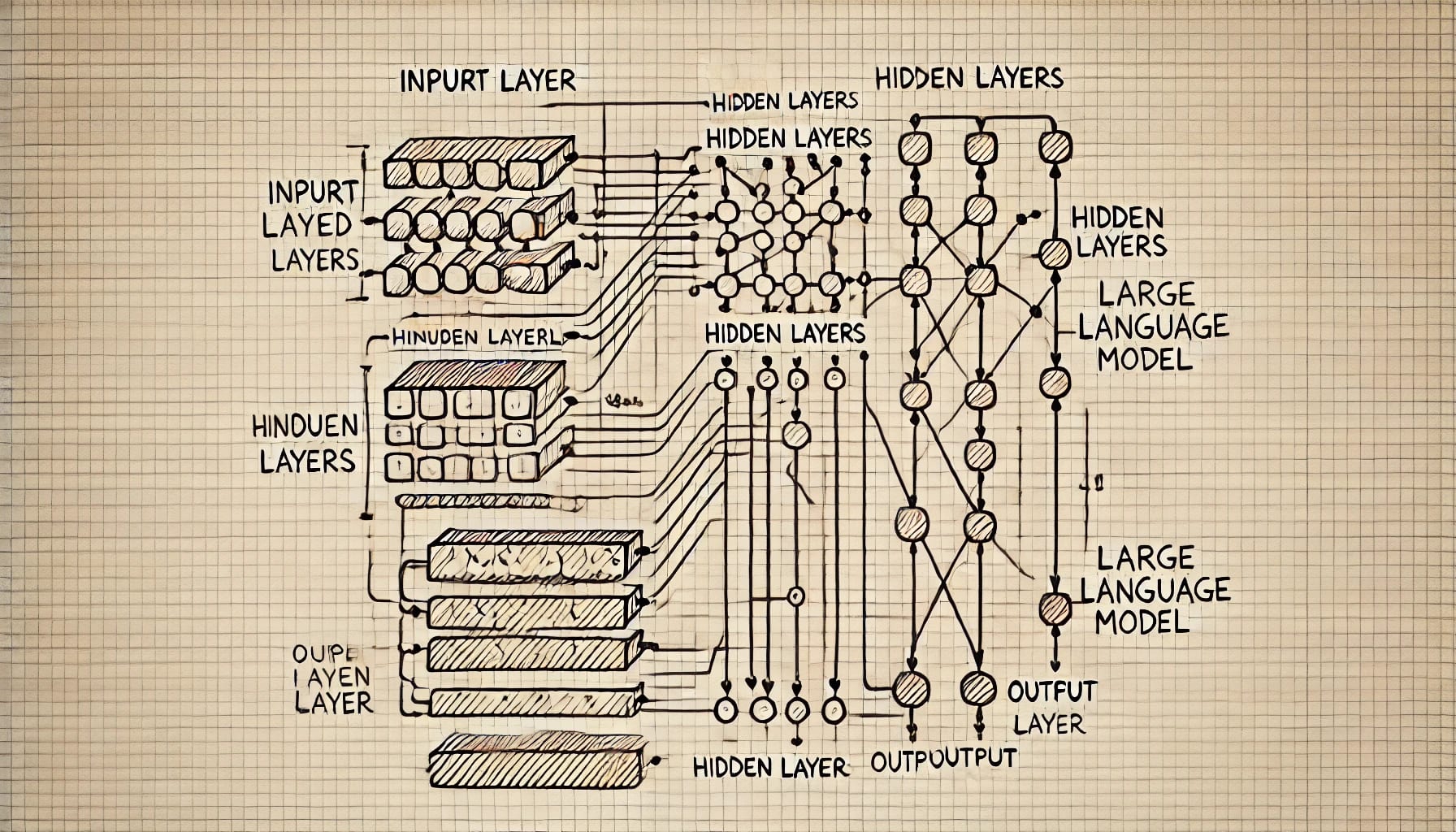
#7 — Working with models
AI startups face critical decisions on LLM integration, migration, versioning, and sizing that can determine success or failure.

#6 — Tuning and Optimizing Workflows
Move beyond basic prompting to deliver more reliable AI products at lower costs.

#5 — Information Retrieval / RAG
RAG systems outperform finetuning for knowledge integration, offering startups faster updates and lower costs.