#160 — The Foundation Sprint workshop
January 10, 2026·5 min read
Contents
A Foundation Sprint is a two-day, high-intensity workshop for founders to get from fuzzy idea to a sharp, testable bet on who you serve, what problem you solve, and why you win—before you write a spec, a deck, or a line of code.
TL;DR for founders
- Use a Foundation Sprint at the very start of a big product or company bet—before you lock into roadmaps, fundraising narratives, or brand stories.
- In 48 hours, a 3–5 person founding crew aligns on one Founding Hypothesis: a simple promise you can validate with Design Sprints, prototypes, and early GTM experiments.
Core concept: Founding Hypothesis

- The Founding Hypothesis is a Mad Libs–style sentence that forces you to specify customer, problem, approach, and differentiation in one simple, legible promise.
- Every breakout product the authors worked on—Gmail, Blue Bottle, Flatiron, Slack—can be reverse-engineered into a clear Founding Hypothesis that made it obvious why customers should care.

Why it matters now
- Most startups die from “confused promise,” not “slow shipping”: multiple internal narratives, vague ICP, and a feature roadmap that doesn’t ladder up to anything crisp.
- The Foundation Sprint drags all the hidden assumptions onto the whiteboard so you can see if your real bet is “3D virtual conference rooms for aficionados” or “fastest, easiest video calls for normal teams.”
When to run it
- Pre–product or pre–major bet: new company, second product line, big repositioning, or a 0→1 internal initiative with real stakes.
- Trigger conditions: founders disagree on who the customer is, debates about “what makes us different” go past 30 minutes, or pitch decks sound good but feel hand-wavy when you try to build or sell.
Who’s in the room
- Max five people: the Decider (CEO / product owner), plus leaders across product, design, engineering, and GTM who will actually execute.
- No spectators: everyone in the room participates in Note-and-Vote, makes tradeoffs, and signs up to act on the outcome.
The Stockholm lesson (where it came from)
- The Google Meet team wasted 18 months polishing a slide deck for a 3D virtual conference room that nobody cared about.
- Under existential pressure in Stockholm, they threw away the extras, built a browser-based prototype in a week, and centered on one simple hypothesis: “fastest and easiest video calls.” That’s the energy this sprint manufactures on demand.
The sprint (how it works)
Day 0: Setup
- Block two full days (about six hours of real work each) for the sprint, phones closed, calendars cleared.
- Set up a physical or virtual room with a big whiteboard, sticky notes, dot stickers, and enough space to keep artifacts visible for both days.
Pre-work
- The Decider drafts a rough, written answer (one paragraph each) to: “Who is our target customer?”, “What problem are we solving?”, “What is our advantage?”, “Who/what are we competing with?”
- Share only as context; the sprint will test and refine these, not rubber-stamp them.
Day 1 morning: Basics

Focus: the “so obvious they get ignored” fundamentals that shape every later decision.
- Choose your target customer (15 minutes).
- Use plain language anchored in real people and teams, not abstractions (“remote-first engineering teams of 10–50 people” vs. “distributed enterprise orgs”).
- Choose an important customer problem (15 minutes).
- Identify pain big enough that switching costs—time, money, political risk—are clearly worth it.
Lock in your advantage
- Identify your advantage (20 minutes).
- Codify why your team is uniquely suited to win: distribution, data, deep domain, speed, or a specific technology edge.
- List competitors, including “do nothing” (20 minutes).
- Enumerate real alternatives your customer uses today and call out the 800-pound gorilla you need to beat in the customer’s mind.
How to decide: Note-and-Vote
- For each Basics question, everyone writes answers silently on sticky notes for five minutes to avoid groupthink.
- The group reviews in silence, dot-votes on the strongest answers, then holds a short, time-boxed discussion where the Decider makes the final call—votes are input, not democracy.
Day 1 afternoon: Differentiation
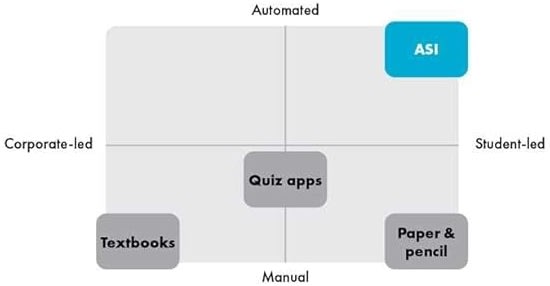
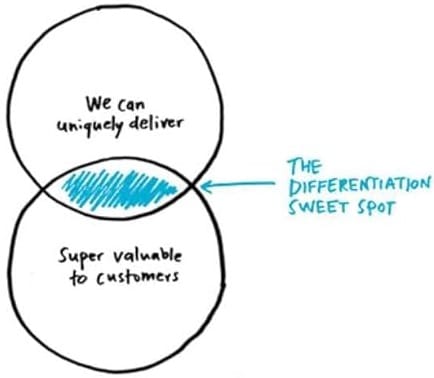
- Translate “advantage + competitors” into a sharp point of view on how you win this specific decision in the customer’s head.
- Reframe the choice so your 800-pound gorilla looks obviously worse on the dimensions that matter most to your target customer.
Outcomes to aim for
- A one-line differentiation: “If you are [customer], and [problem], choose us instead of [main alternative] because [sharp, specific reason].”
- A short list (3–5 bullets) of “non-negotiable truths” that must remain true for your strategy to make sense.
Day 2: Approach and decision
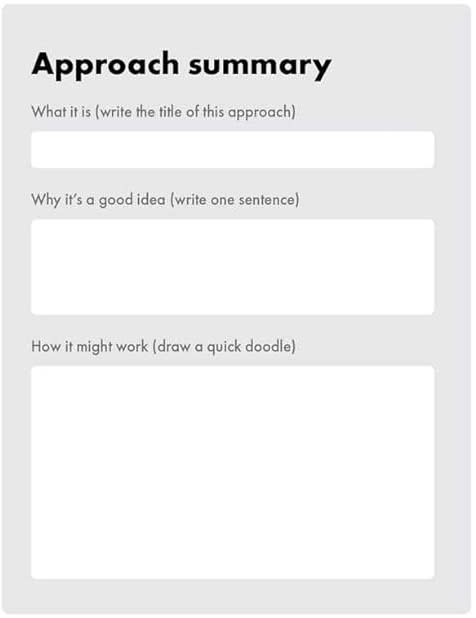
- Explore multiple strategic approaches that could satisfy the same Founding Hypothesis: different product surfaces, pricing models, GTM motions, or sequencing of features.
- Use the same Note-and-Vote pattern to weigh them against your Basics and Differentiation: Does this approach really make our promise more believable and harder to copy?
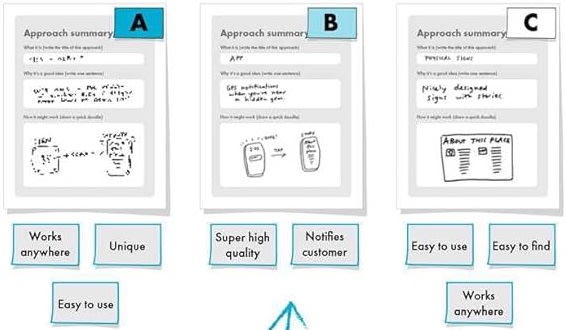
By the end of Day 2, you ship:
- A single, written Founding Hypothesis that everyone signs.
- A short list of immediate validation experiments (Design Sprints, prototypes, sales conversations, landing pages) that will stress-test the hypothesis.
The takeaway
- Use the Founding Hypothesis as the spine for everything else: product strategy docs, investor narrative, homepage copy, and sales pitches should all be traceable back to this sentence.
- Re-run a lightweight Foundation check whenever you hit major inflection points—new segment, new product line, post–Series A scaling—so the strategy keeps up with reality.
How to know it worked
- You can answer, in one breath: “Who is this for?”, “What problem does it solve?”, “Why us, not $INCUMBENT or doing nothing?”—and your co-founders give the same answer.
- Your next Design Sprint, prototype, or GTM test has an obvious goal: prove or disprove the Founding Hypothesis as quickly and cheaply as possible.
Frequently asked questions
What is a Foundation Sprint, and how does it work?
A Foundation Sprint is a focused 2-day workshop that helps a small team define exactly who their product is for, what problem they solve, how they are different, and which strategic bet to make first. On day one, the team clarifies the basics (customer, problem, advantage, competitors); on day two, they explore multiple approaches and converge on a single Founding Hypothesis—a clear, testable promise that future Design Sprints, prototypes, and GTM experiments are designed to validate.
How is a Foundation Sprint different from a Design Sprint?
A Foundation Sprint happens earlier than a Design Sprint: it’s about deciding what you should be building and why, not how to design and test a specific solution. A Design Sprint is typically a five-day process to prototype and user-test one solution, while a Foundation Sprint is a two-day strategy process to align the team on customer, problem, differentiation, and a Founding Hypothesis that later Design Sprints will attempt to prove or disprove.
Who created the Foundation Sprint, and what experience is it based on?
The Foundation Sprint was created by Jake Knapp and John Zeratsky, the creators of the original Design Sprint and partners at venture fund Character Capital. They distilled it from decades of work on products like Gmail, Google Meet, Google Ads, YouTube, and from advising more than 300 companies including Flatiron Health, Gusto, One Medical, Blue Bottle Coffee, and Slack, all of which benefited from a clear, simple founding promise.
What is a Founding Hypothesis in startups?
A Founding Hypothesis is a concise, Mad Libs–style statement that combines your target customer, their core problem, your approach, and your differentiation into one simple, testable promise. For example, Gmail’s implicit hypothesis was that people overwhelmed by email would switch from Outlook, Hotmail, or Yahoo to a product offering dramatically more storage and great search, while Slack’s promise centered on teams wanting communication that is faster and more organized than email.
When should a startup run a Foundation Sprint?
Founders should run a Foundation Sprint at the beginning of a big bet: starting a company, launching a new 0→1 product, entering a new market, or significantly repositioning an existing product. It is especially valuable when co-founders give different answers to basic questions like 'Who is our customer?' or 'What makes us different?', or when pitch decks and roadmaps feel polished but the underlying strategy is still fuzzy or disputed.
How do I prepare for a Foundation Sprint?
Preparation involves forming a tiny team (usually three to five people including a true Decider), blocking two full days with at least six hours of focused time each, and setting up a physical or virtual workspace with a whiteboard, sticky notes, paper, and dot stickers for voting. Before the sprint, the Decider can draft rough answers about the target customer, key problem, advantage, and competitors to provide context, knowing that the sprint will surface, challenge, and refine these assumptions.
Who should be in the room for the Foundation Sprint?
The sprint should include a small cross-functional group: the Decider (often the CEO, founder, or product lead) plus leaders from product, design, engineering, and possibly GTM or customer-facing roles who will actually execute. Limiting the group to about five people prevents slow, consensus-driven decision-making and ensures the Founding Hypothesis reflects both strategic intent and real-world constraints in building and selling the product.
What is the Google Meet Stockholm story, and what does it teach founders?
Before Google Meet, the team spent 18 months refining a complex pitch for a 3D virtual conference room, loaded with interactive tools that colleagues never fully understood or wanted. Under pressure during a week in Stockholm, they threw away the complexity and focused on a simple hypothesis—'fastest and easiest video calls in the browser'—and built a working prototype in days that spread virally inside Google, illustrating how clarity and focus beat feature-rich but fuzzy visions.
What are examples of strong Founding Hypotheses from real companies?
Gmail centered on users overwhelmed by email, promising to solve overflowing inboxes better than Outlook, Hotmail, and Yahoo through more storage and powerful search. Blue Bottle Coffee focused on coffee enthusiasts willing to pay more and go out of their way for freshly roasted, carefully prepared coffee that far exceeded mainstream chains, while Flatiron Health targeted oncology practices needing better data and software than traditional medical record systems.
What problems does a Foundation Sprint help founders avoid?
A Foundation Sprint helps avoid building on vague visions, misaligned co-founder assumptions, and endless debates about differentiation that never resolve into real decisions. It also surfaces dangerous hidden hypotheses—like targeting '3D aficionados' with an overcomplicated product—so founders can replace them with simpler, higher-leverage promises that customers actually understand and care about.
How does the Note-and-Vote method improve decision-making in strategy sprints?
Note-and-Vote improves decisions by separating idea generation from discussion: everyone writes ideas silently, the group reviews and votes, and then the Decider makes the final call after a brief debate. This pattern reduces groupthink and HiPPO dynamics, speeds up decision-making, and ensures a Foundation Sprint produces a clear, actionable strategy instead of being derailed by the loudest voice in the room.
How does a Foundation Sprint connect to product-market fit?
The Foundation Sprint sharpens your path to product-market fit by forcing you to choose a specific customer, a painful problem, and a differentiated approach, then turning that into a testable Founding Hypothesis. Instead of running random experiments, you design prototypes, Design Sprints, and GTM tests that directly confirm or falsify your core promise, just as teams behind Gmail, Slack, and other breakout products did with their early, simple promises.
Can a Foundation Sprint be used outside of software and B2B SaaS?
Yes, because the Foundation Sprint focuses on universal strategic elements—customer, problem, approach, and differentiation—rather than any particular technology stack. Case studies like Blue Bottle Coffee show how consumer brands can use a clear Founding Hypothesis to guide everything from product design to store experience and marketing, while Flatiron Health demonstrates its relevance in regulated, non-consumer domains like healthcare.
How much detail should go into my Founding Hypothesis?
A strong Founding Hypothesis is simple enough to say in one breath but specific enough to be falsifiable, naming a clear customer, a concrete problem, and a believable advantage over real alternatives. If it sounds like it could apply to dozens of products or 'everyone,' it is too vague; if it hinges on a tiny, contrived niche like '3D aficionados' without a clear switching reason, it is likely too narrow or misguided.
How do I know if my project’s main competitor is actually 'do nothing'?
Your main competitor is 'do nothing' if customers can continue with their current workaround or status quo without significant immediate pain, risk, or cost, even if your solution seems objectively better. In the Foundation Sprint, explicitly listing competitors—including 'do nothing'—often reveals that the real challenge is making the problem urgent and painful enough that teams will endure switching costs, not just out-feature existing tools.
How can I turn my Founding Hypothesis into concrete experiments?
Once you have a Founding Hypothesis, translate it into a small set of validation experiments such as Design Sprints, clickable prototypes, early-access programs, or targeted customer interviews with your exact ICP. For example, a 'fastest, easiest video calls' hypothesis might be tested by a bare-bones browser prototype used internally or by a handful of design partners, with success measured by adoption, repeat usage, and qualitative feedback on speed and simplicity.
How often should we revisit or adjust our Founding Hypothesis?
You should revisit your Founding Hypothesis at major milestones like launching, raising a new round, entering a new segment, or when data consistently contradicts your assumptions. Many teams run a lightweight version of the Foundation Sprint during these inflection points to re-confirm who their best customers are, which problems are most acute, and whether their differentiation still matters in a shifting competitive landscape.
What if our Founding Hypothesis turns out to be wrong?
If your hypothesis is wrong, that’s a success of the process: you have quickly falsified a clear bet instead of slowly discovering that a vague vision doesn’t resonate. The Foundation Sprint’s goal is to make assumptions explicit so that you can pivot, refine your customer or problem, and craft a new hypothesis grounded in what you learned, much like the Google Meet team adjusted their strategy away from 3D rooms toward simple, fast calls.
How can founders use the Foundation Sprint outcomes in fundraising?
The Founding Hypothesis and the artifacts from a Foundation Sprint can anchor your fundraising narrative by clearly articulating the customer, problem, and unfair advantage behind your company. Investors who liked products like Gmail, Slack, and Blue Bottle responded to their simple, memorable promises; framing your pitch around a similarly sharp hypothesis makes your story easier to understand, remember, and underwrite.
Is a 2-day Foundation Sprint realistic for very early, resource-constrained teams?
For early-stage teams, two days may feel like a big investment, but it is small compared to months of building the wrong thing or misaligned co-founder expectations. The article is grounded in teams who wasted long cycles before finding clarity—as with the pre-Meet 3D concept at Google—and argues that a short, intense Foundation Sprint is one of the highest-leverage uses of founder time at the beginning of a big project.
Keep reading

#161 — The fundraising calendar
There is a seasonality to fundraising. When you raise your next round can have as much an impact as vision, product, and team. Don't leave it as an afterthought.

#162 — User vs. buyer messaging for B2B founders
There is a distinct difference between user and buyer messaging. Founders often conflate the two, which can cost you deals.
#163 — Launching your DevRel program: 4 steps
If you built a developer product, you need a strategy to get developers actually using it. They won't just come.